There is a particular quiet to tea‑leaf reading. Not the theatrical kind of fortune‑telling, but something smaller, domestic, almost tender. A cup drained, turned, tapped; a pause while the leaves settle into shapes that might mean something or nothing at all.
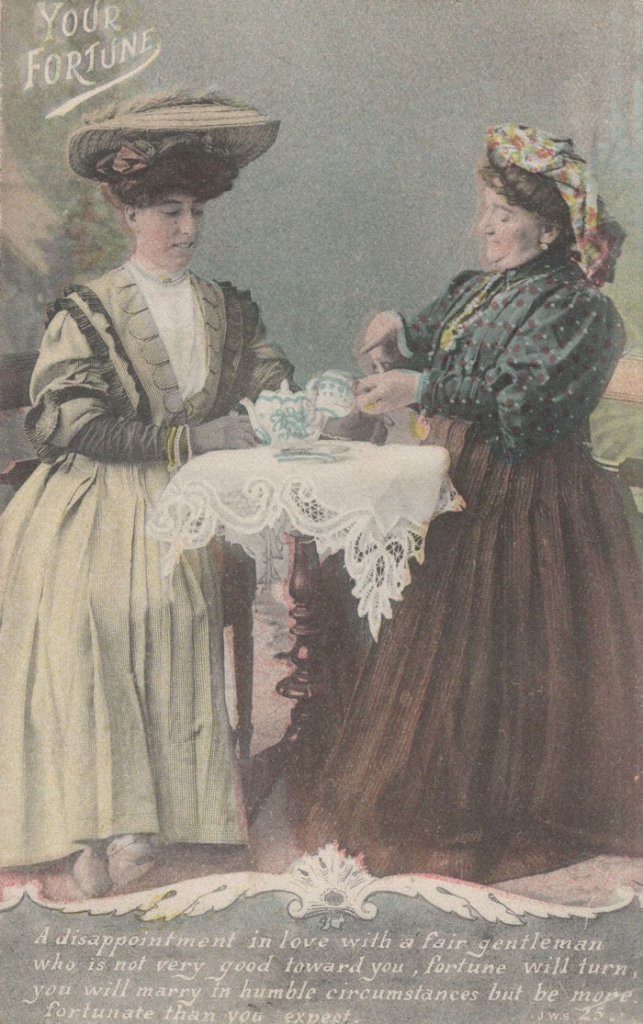
This early twentieth‑century postcard captures that moment of stillness. Two women at a lace‑covered table, leaning in toward the same small mystery. A cup, a question, a future imagined in the soft debris of everyday life. These rituals were never really about prophecy. They were about reassurance, companionship, and the comfort of being witnessed while you wonder.
The language printed beneath the image is typical of the period, a blend of caution, romance, and humble hope. It reflects the way these readings often worked: a gentle narrative offered to someone who needed a story to hold onto.
In the Parlour, this postcard sits as a reminder of how ordinary objects, a teacup, a table, a shared moment, once carried the weight of possibility. A domestic superstition, yes, but also a small act of care.
If you’d like to explore the history, symbols, and methods in more depth, you can read more about tasseography here →
Leave a Reply