Sewing has always fascinated me, my mum taught me to sew and despite probably driving my mum mad along the way, she was always patient and understanding of the challenges that came with it. I have a few hurdles that make machine sewing an adventure of its own: I’m left-handed, I have dyslexia, dyspraxia, ADHD and a squint. All of these factors affect my coordination, spatial perception, and fine motor skills, which can make even the simplest patterns feel like a mountain to climb. But, I truly enjoy sewing, and that love has kept me going through these obstacles. I’ve managed to make a few things already, and each project feels like a huge achievement.
Learning the Basics: A Test of Patience and Persistence
When I first started sewing, I quickly learned that while things may be straightforward for other people they can be a real challenge for me (and I’m sure I’m not alone). For instance, threading a needle is a task that often involves several attempts, and my left-handedness makes using right-handed sewing tools awkward. Most sewing tools are designed with right-handed people in mind, which means my natural grip and orientation often feels “off” or reversed. When I purchased my first sewing machine I was over the moon but this soon started to wear thin due to various frustrations, that became increasingly more problematic.
Finding the Right Sewing Machine
When I bought my first sewing machine, a Janome, I was thrilled to start sewing. But I quickly ran into an unexpected hurdle: the front-loading bobbin. As a beginner, the task of inserting the bobbin correctly felt like solving a puzzle without all the pieces, and it didn’t help that I found the mechanism tricky to reach and manoeuvre. Over the years, despite trying to practice and figure out the correct setup, the front-loading bobbin kept tripping me up.
For those who haven’t encountered it, a front-loading bobbin requires placing the bobbin case inside a compartment at the front of the machine, often accessed by a small panel that needs to be opened each time. The process of fitting the bobbin case just right and making sure the thread was positioned correctly was time-consuming and frustrating for me. I watched videos, read tutorials, and practiced repeatedly, yet somehow, it still didn’t feel natural. Sewing should be a relaxing, enjoyable experience, but instead, I was spending more time trying to load the bobbin than actually stitching.
After a lot of trial and error, I realised it might not just be my skills that were causing the frustration; it might be that the machine’s setup just wasn’t the best fit for me. After years of struggling, I finally decided to invest in a new machine, hoping for an option that was more beginner-friendly.
That’s when I discovered the Brother sewing machine with a top-loading bobbin. Unlike the front-loading mechanism, the top-loading bobbin sits just below the needle plate and is visible through a clear cover. This design means I can see the bobbin as it’s loaded, and I can also easily check the amount of thread remaining. It was a revelation to me; no more opening side panels or fitting the bobbin case at an awkward angle. The top-loading design took seconds to load, and the difference in my sewing process was immediate and dramatic.
Using the Brother machine, I was able to focus more on sewing and less on mechanics. With the ease of the top-loading bobbin, I could finally dive into projects without the lingering worry that a tangled or misaligned bobbin would halt my progress. The frustration that had held me back was replaced by excitement, and to try more ambitious projects.
Switching machines gave me a fresh start, and choosing one with a top-loading bobbin made sewing accessible and enjoyable. This change also opened up a new level of creativity; now that the basics felt easier, I could focus on experimenting with different stitches, techniques, and fabrics, and I realised that having the right tools can make all the difference. It’s amazing how a simple change in design can transform the sewing experience, turning it from a frustrating challenge into a relaxing and rewarding hobby.
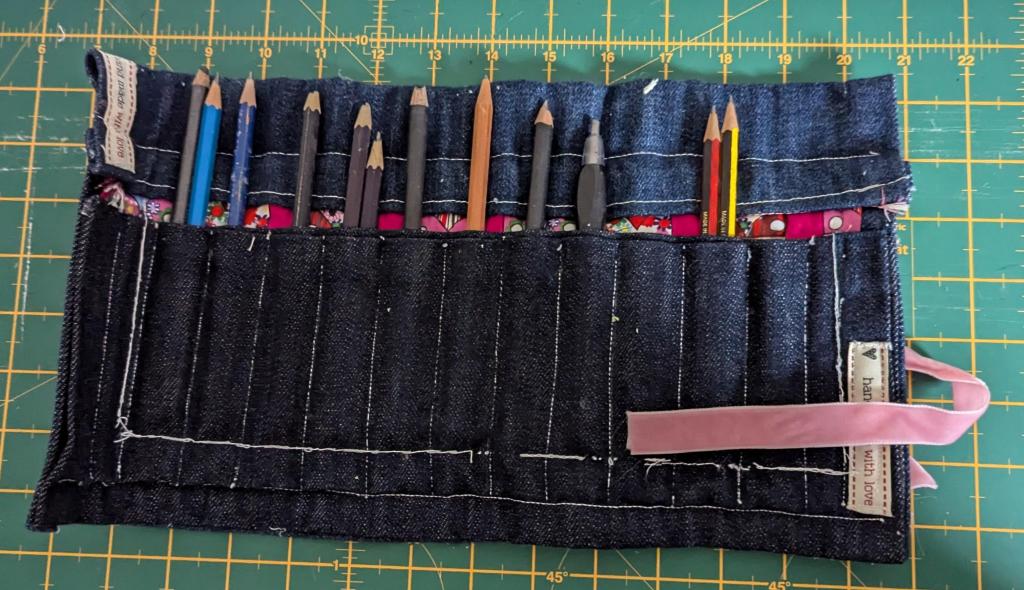
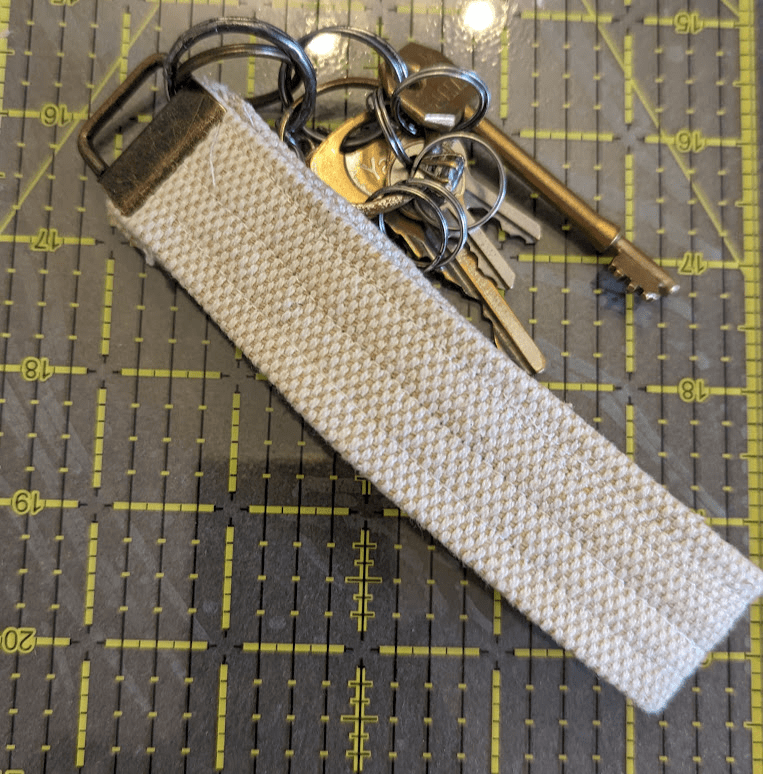
The first projects I attempted were a simple cosmetic bag, (a gift) a key fob and a pencil roll. While they might seem like small things, they took a lot of time, patience, and more than a few seam-rips. Sewing a straight line became a test of perseverance. Often, I would sew a seam, only to find it crooked or mismatched. Ripping seams and starting over was frustrating, but seeing those projects finished was worth every moment of struggle.
Working with Patterns: Dyslexia and Direction Challenges
Patterns pose another unique challenge for me (and anyone else with similar difficulties). Dyslexia can make it hard to read and follow step-by-step instructions, especially when they’re written in a technical, detail-heavy language that sewing patterns often use. I found myself losing my place or misinterpreting symbols and numbers, which sometimes leads to cutting the wrong size piece of fabric, or misaligning fabric sections, but with patience, though, I’ve found strategies to help. I take each step slowly, sometimes reading aloud, and using highlighters or sticky notes to mark my progress so I don’t lose my place.
Dyspraxia and Fine Motor Skills
Dyspraxia affects my coordination and motor skills, making precise actions, like controlling the sewing foot and guiding fabric at the same time, difficult. Managing the pressure on the pedal while keeping the fabric steady can be a little chaotic! But I’ve learned to slow down, and take extra time with each movement. This often means that I need to sew in shorter sessions, and taking breaks to avoid frustration. It’s a slower process, but the end result is rewarding and helps me build more confidence with each try.
Finding Adaptations and Persevering Through Setbacks
Through trial and error, I’ve found a few adaptations that work for me. For instance, using specialised left-handed scissors and positioning my sewing machine at an angle helps make the setup feel more natural. I also allow myself the time to practice new skills before diving into a project, whether it’s sewing a straight line or working with a new fabric type.
Currently, I’m working on a new project, which, although is supposed to be a simple pattern, has presented its own set of challenges. The fabric shifts, I lose track of steps, and sometimes the thread gets tangled. But with each setback, I’m learning not only about sewing but also about patience and persistence.
Celebrating Achievements
Even though my projects may take longer, and my seams may not be perfectly straight, each finished item is a testament to my hard work and perseverance. Every cosmetic bag, pencil roll, and even the smallest completed seam feels like an achievement. I’m learning to celebrate each step, and knowing that my sewing journey will look different from others, it’s uniquely mine.
Seeking Community: Learning Together
I know there are others out there with similar experiences, those who navigate sewing with different abilities and find creative ways to make it work. I would love to hear from anyone with similar challenges and hear how they adapt. Maybe you have tips that could help me (and others!) keep going in this journey.
To anyone who struggles with sewing due to learning differences, motor skills, or even just plain frustration, keep going. Celebrate each stitch, and remember that every project is an achievement.
Sewing with ADHD: Attention, Rhythm, and Self‑Kindness
ADHD adds another quiet layer to this learning process, not in a dramatic or disruptive way, but as a shifting rhythm that shapes how I approach each step. For me, it shows up in the spaces between actions: the pause before beginning, the sudden leap ahead in my mind, the moments where I forget what I was doing because a new idea has already arrived. Sewing becomes less about “staying focused” and more about understanding how my attention moves, and working with that movement rather than against it.
Where dyslexia affects how I read instructions, and dyspraxia affects how my body carries them out, ADHD affects the tempo. Some days I start easily; other days I circle the task for a while before I can begin. Sometimes I slip into deep, absorbing hyperfocus and lose track of time; other times I need to break a single seam into tiny, manageable moments. None of this means I’m doing it “wrong,” it simply means my brain has its own way of travelling through the process.
What helps is externalising the steps my mind can’t reliably hold. A small sticky note saying “right sides together,” a simple Now / Next list, or a photo of how a piece should look before I sew it gives me a place to land when my thoughts scatter. Working in short, gentle bursts, five minutes, one seam, one line of basting, keeps the process from becoming overwhelming. And when hyperfocus does arrive, I try to pair it with small grounding cues: a drink within reach, a reminder to stretch, a moment to check in with my body.
ADHD also heightens my sensory world. Noise, clutter, and bright light can feel sharper than they should, so creating a calmer workspace helps me settle enough to begin. Soft lighting, a clear table, and a quieter environment make the whole process feel more accessible and less demanding.
Most of all, ADHD has taught me to treat sewing as a conversation rather than a test. My attention shifts, my energy changes, and my brain takes its own routes, and that’s allowed. Sewing becomes a practice of patience, not just with the fabric but with myself. In that slow, adaptive rhythm, I find a steadiness that feels like its own kind of craft.
Leave a Reply