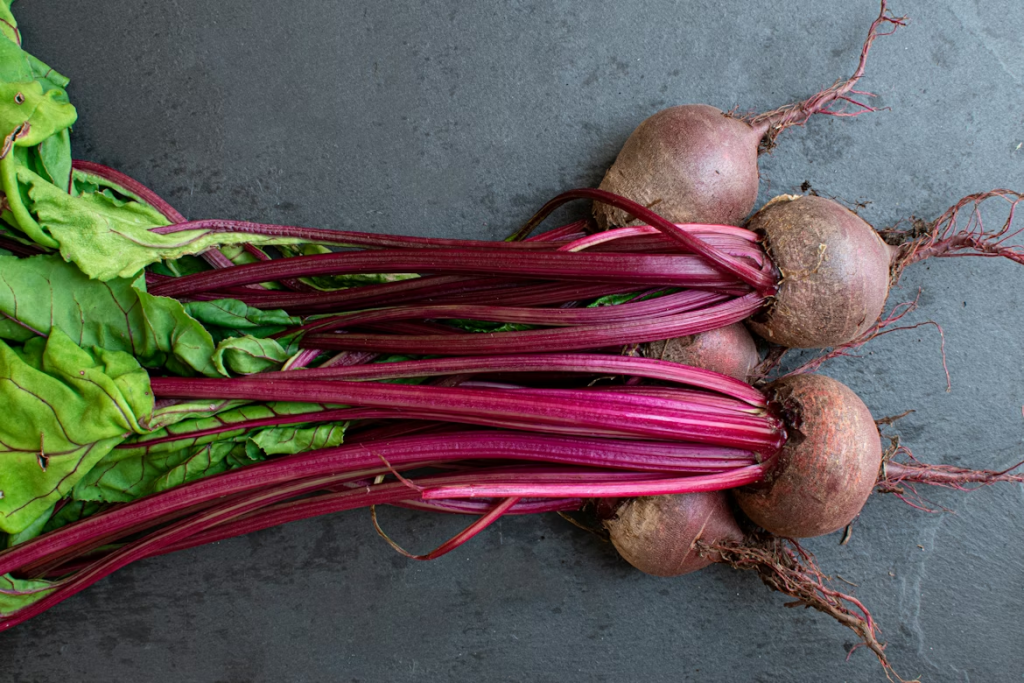
Image Credit: Emma-Jane Hobden via Unsplash
Beetroot’s deep pink‑purple looks as though it should be a dream for natural dyeing, especially with the way its betalain pigment stains hands and cloth so easily. But newer studies suggest that this intensity is misleading; beetroot rarely performs as a dependable, long‑lasting dye.
This beautiful red-purple colour which we associate with beetroot is, unfortunately, short‑lived when used as a natural dye. Its red‑purple tones may look rich and full of promise, but they fade quickly on fabric. This is due to betalain, a pigment that is extremely sensitive to light, shifts in pH, and even the natural ageing of the cloth. Unlike more stable natural dyes such as indigo or turmeric, betalain breaks down easily. As a result, the vibrant colour it imparts often begins to disappear within days or weeks, even when the fabric is kept away from direct sunlight.
This discovery can be disappointing, especially for those who, like me, are drawn to the incredible colours that beetroot offers. There’s something irresistibly beautiful about that bright, fuchsia tone that no other natural source quite replicates. Its allure is almost deceptive; seeing how brilliantly it stains surfaces, one would assume that it would have staying power. But even with special preparation techniques, such as pre-treating fabrics with mordants to help dyes bond, beetroot’s colour remains fleeting.
The transitory nature of beetroot dye or should we say stain is intriguing, because it raises questions about the expectations. It also highlights the limitations of natural dyeing. While beetroot is not suitable for projects requiring long-lasting colour, it is still used for short-term applications. It is also great for experimental textile art. Using beetroot is beneficial for projects not often washed or exposed to sunlight. It could offer a unique, temporary solution. Whilst its colours, the beautiful red-purple may fade, they could be re-dyed. It can also be layered with other natural dyes to create new effects. This opens a door for creative, evolving pieces rather than static ones.
This discovery also underscores the importance of understanding the chemistry behind natural dyes. Those passionate about sustainable dyeing should know the properties of each dye source. They should also be aware of their limitations. This knowledge aids in selecting the best options for specific projects. Beetroot’s pigment may not hold up over time. It serves as a beautiful reminder of the many shades of colours that nature provides. This beauty is fleeting, even if only for a short while.
Leave a Reply