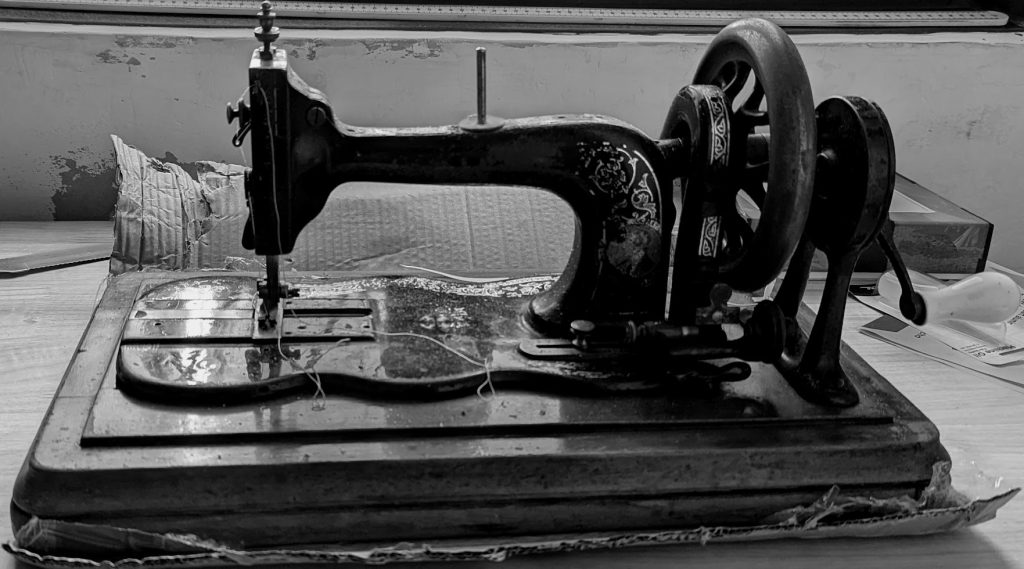
Not true — at least, not in the way the adverts promised.
When the domestic sewing machine arrived in the late 19th and early 20th centuries, it was sold as a miracle: faster sewing, less strain, more free time. But what actually happened was the opposite. Because sewing became quicker, the amount of sewing expected from women increased dramatically.
Before machines, hand‑sewing was slow. Families owned fewer clothes, garments were worn for longer, and repairs were minimal. The limits of hand‑sewing naturally kept the workload small.
Once a machine entered the home, everything changed. Faster sewing meant:
- more garments to make
- more repairs to keep up with
- more alterations to follow fashion
- more household textiles to produce
- more pressure to keep everything “up to standard”
The machine didn’t reduce labour — it multiplied it.
It also shifted work that had once been paid (dressmaking, alterations, mending) into the home, where it became unpaid and invisible. Many women took in piecework to survive, sewing long hours for pennies, on top of childcare, cooking, cleaning, and emotional labour.
The sewing machine sped up the work, yes. But it also raised the expectations placed on women’s time, skill, and energy.
A labour‑saving device that quietly created more labour.
Leave a Reply